In our increasingly digital world, two nature-based practices—forest bathing and grounding—are gaining scientific recognition for their profound effects on health and wellbeing. These natural therapies align perfectly with naturopathic medicine’s foundational principle that recognizes the value of our natural world in assisting the healing process.
Understanding Forest Bathing (Shinrin-Yoku)
Forest bathing—or shinrin‑yoku—is a Japanese practice that involves immersing yourself fully in a forest using all five senses. A review of clinical studies found that forest bathing significantly increased natural killer cell activity and antiviral protein expression in human participants, supporting immune function, reducing stress hormones, and enhancing mood.
Shinrin-yoku is not the same as exercise or hiking; it refers to the act of simply being in nature, connecting through all five senses. Since 2004, Japanese studies have led to the establishment of Forest Medicine, an interdisciplinary science within alternative, environmental, and preventive medicine, as forest exposure has been shown to positively influence stress, immunity, and overall well-being.
4 Proven Benefits of Forest Bathing
Systematic reviews show that forest bathing significantly improves immune function and cardiovascular and metabolic health, confirming its value in preventive wellness and stress reduction.
Stress Reduction: Forest bathing has been shown to reduce stress hormones such as cortisol, epinephrine, and norepinephrine. One study found that salivary cortisol levels were significantly lower in participants who spent time in forest environments compared to urban settings, supporting the stress-relieving effects of time spent in nature.
Immune Enhancement: Additional research indicates that shinrin-yoku increases natural killer cell activity and anticancer proteins.
Improved Mental Health: Systematic reviews have shown that forest bathing can reduce anxiety, depression, anger, and fatigue while increasing vigor, suggesting it may be especially effective for short-term relief of anxiety symptoms.
Cardiovascular Support: Forest bathing has been shown to reduce blood pressure and heart rate while helping regulate the autonomic nervous system. A scientific review found that forest bathing decreases blood pressure and pulse rate and promotes parasympathetic nervous activity, supporting its role in cardiovascular health and stress resilience.
Understanding Grounding (Earthing)
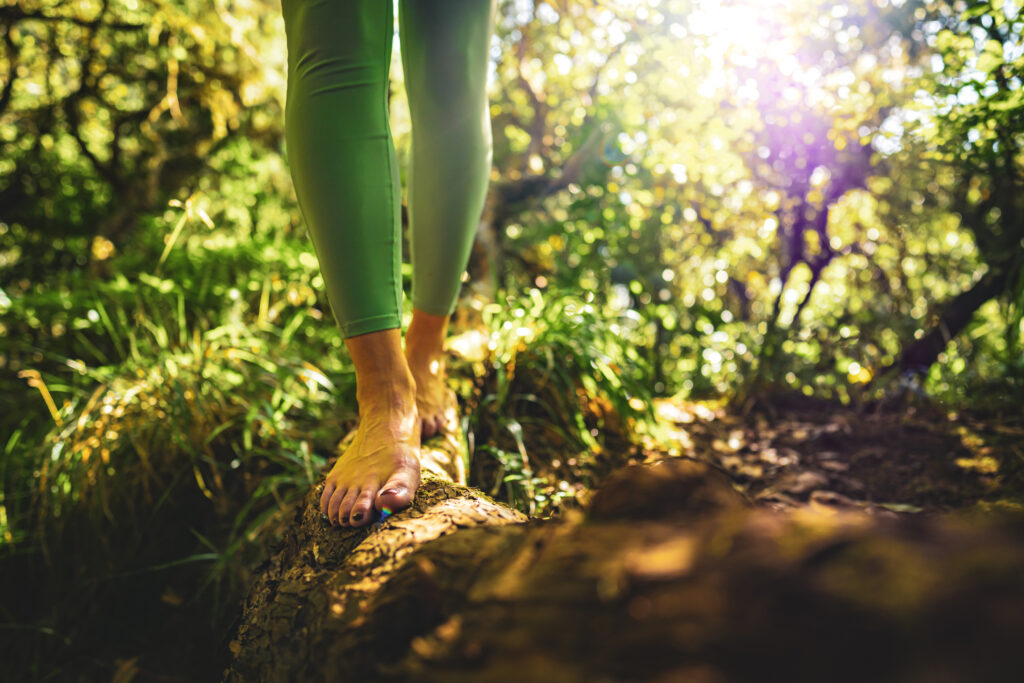
Grounding for health purposes refers to direct skin contact with the Earth’s surface, such as walking barefoot or touching the ground with your hands. The practice is based on the theory that the Earth carries a negative electrical charge, and that direct contact allows the body to absorb electrons, a concept explored in grounding research. The causative factors are still being explored.
Research-Backed Benefits of Grounding
Extensive research has explored the potential health benefits of grounding:
Inflammation Reduction: Grounding has been shown to reduce key signs of inflammation—redness, heat, swelling, pain, and loss of function. Research suggests the body may absorb electrons from the Earth that help neutralize free radicals and reduce oxidative stress, as shown in studies on grounding and inflammation.
Pain and Stress Relief: Participants in grounding studies have reported lower levels of pain, stress, depression, and fatigue. Those experiencing more intense pain also noted improved relaxation and better sleep, as documented in clinical research on grounding.
Nervous System Balance: Grounding may help regulate the autonomic nervous system by shifting the body from a fight-or-flight state to a rest-and-recovery mode, according to research on its physiological effects.
Additional Benefits: Grounding has been associated with a range of potential health effects, including improved sleep, normalization of the day–night cortisol rhythm, increased heart rate variability, faster wound healing, and reduced blood viscosity, as observed in published studies.
The Naturopathic Connection
These practices align with the core principles of naturopathic medicine, which emphasizes the healing power of nature. Naturopathic doctors often incorporate exposure to healthy natural environments as a foundational element of preventive care and overall well-being, as outlined in this overview of naturopathic principles.
The principle of “The Healing Power of Nature” acknowledges that NDs harness the body’s inherent wisdom to heal itself and the interconnectedness of our body, environment and lifestyle on total health
Practical Implementation
Forest Bathing: Find a natural area with trees, turn off electronic devices, and walk slowly while engaging all your senses. Focus on deep, steady breathing, and spend at least 15–20 minutes mindfully connecting with nature. Research shows that even a brief, 15-minute session of shinrin-yoku can reduce negative mental health symptoms, as noted in this clinical study.
Grounding: Here are a few ways to practice grounding. Feel free to pick one or more, recognizing that some options may be more accessible than others.
- Walk barefoot on grass or sand for 10-20 minutes daily
- Lie on the ground/grass
- Swim in lakes, rivers or oceans
- Garden with bare hands in direct contact with soil
Research indicates that various grounding methods can provide health benefits.
Important Considerations
Systematic reviews note that while forest bathing shows promising short-term benefits—like reduced stress and improved mood—its long-term impact is less certain. Research highlights the need for more rigorous, large-scale studies to fully understand the practice’s potential over time, as seen in this review of existing studies.
Preliminary grounding studies have often involved small sample sizes and relied on subjective measures, which means more research is needed before drawing broad conclusions. However, both grounding and forest bathing are generally considered safe for healthy individuals. Just be mindful of environmental hazards when outdoors, and stop if you experience any unusual symptoms.
Conclusion
Forest bathing and grounding offer accessible ways to harness nature’s healing potential. Current evidence suggests that grounding—reconnecting with the Earth’s surface electrons—can support stress reduction, boost immune function, and enhance overall well-being. One study found that grounding reduces inflammation, improves immune response, and supports wound healing, aligning with naturopathic medicine’s view of nature as a fundamental part of healing.
For personalized guidance on incorporating nature-based practices into your wellness routine, consider consulting with a licensed naturopathic doctor who can assess your individual needs and develop a comprehensive natural health approach.