Screens are everywhere in our modern world, from the phones and tablets in our hands, to computers, smartwatches, TVs, and the LED lights above us. While these technologies offer convenience, connectivity, and knowledge, they also emit a high concentration of blue light that can disrupt sleep, strain the eyes, and contribute to long-term health effects. Screen time can be unavoidable in daily life, but, being aware of the impacts that blue light can have can help mitigate its effects on sleep and overall health.
What is Blue Light?
Light itself has alerting and awakening effects that can be useful in the morning and daytime, but can disrupt sleep onset and maintenance. The circadian system is most sensitive to blue light in the 450–480 nm range, which is especially potent at suppressing melatonin and enhancing alertness. Most modern screens and LED lights emit light wavelengths that place them right in this biologically active range, which explains why they are able to have effects on sleep and the circadian system. This wavelength mimics the natural light of morning, signalling the body to wake up and stay alert, which can be helpful during the day but problematic at night when it is time to rest.
Why is Blue Light Bad?
Evening exposure to ambient lighting, eBooks, and LED-backlit screens like smartphones and laptops has been shown to delay and suppress human melatonin production. This type of light exposure before bedtime has been shown to reduce both subjective and objective sleepiness, increase the time it takes to fall asleep, and decrease REM sleep. Chronic suppression of melatonin not only disrupts sleep and contributes to insomnia but can also increase oxidative stress and impair the functionality of the immune system. However, blue-light isn’t always bad, research suggests that morning exposure to blue-light can support circadian rhythm alignment, increase wakefulness, and even improve sleep fragmentation potentially due to its melatonin suppressing effects. A study done on individuals recovering from traumatic brain injury found that daytime blue light exposure improved circadian rhythm regulation, daytime alertness, and executive functioning compared to amber light. This highlights that timing matters: blue light may be therapeutic in the morning but disruptive at night due to its effects on melatonin and melatonin’s natural rhythm in sleep and wakefulness.
Blue Light On Skin and Eyes
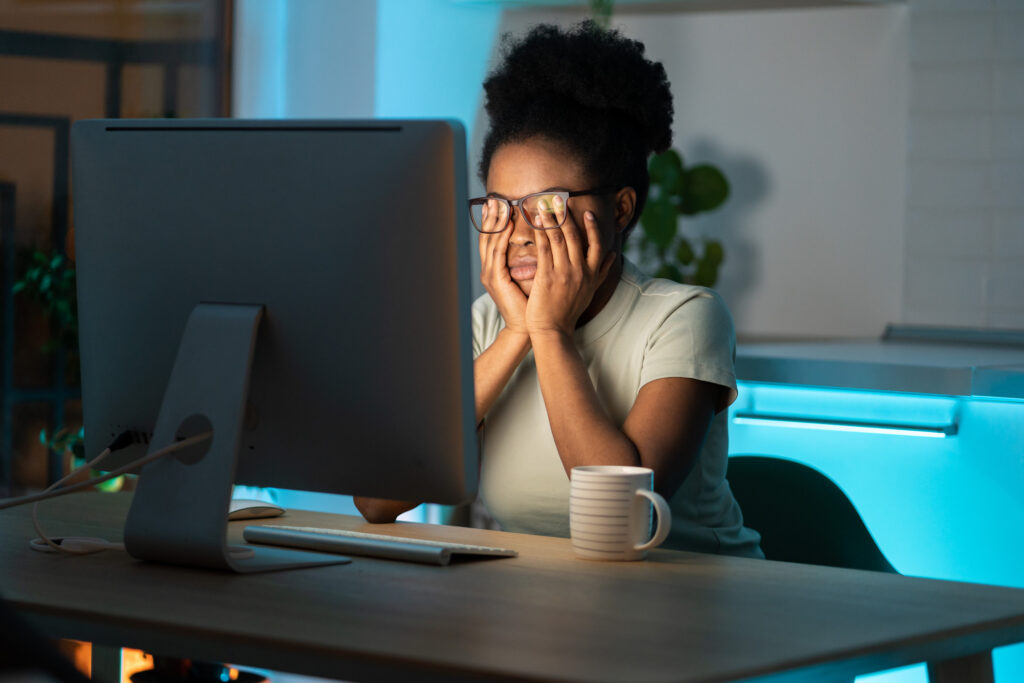
In the skin, blue light can generate reactive oxygen species (ROS) and superoxide radicals that lead to oxidative stress. Oxidative stress in the skin depletes antioxidants, damages DNA, and impairs collagen and elastin, leading to inflammation, premature aging, and increased laxity of the skin. Blue light can also contribute to hyperpigmentation conditions like melasma by disrupting melanocyte function, especially in those with darker skin tones. Blue light can cause damage to eye tissue as well with excessive exposure showing oxidative stress, inflammation, DNA damage, and mitochondrial dysfunction. In the retina, photoreceptors (rods and cones) convert light into neural signals that are sent to the brain and retinal pigment epithelium cells support visual function by clearing debris, maintaining a blood-retinal barrier, and being a protective layer against oxidation and radicals. Healthy rods, cones, and retinal pigment epithelium cells are important for normal vision and damage to these cells can cause digital eye strain and age-related macular degeneration. Excessive blue light exposure can cause significant photochemical damage to the retina and inflammation in the eye from the development of ROS. Prolonged screen time can cause blurry vision, headaches, dry eyes, and difficulty focusing, but this is likely not due to the blue light.
Strategies To Reduce Blue Light Effects
Lifestyle Adjustments
- Wear blue-light blocking glasses with amber lenses: a small RCT on women with insomnia found that wearing amber-tinted lenses in the 2 hours before bedtime improved sleep quality and sleep time compared to wearing clear lenses.
- Opt for screen-free activities before bed, such as reading, listening to a podcast, writing, meditation, or having a bath.
- Include oral antioxidants like vitamin C, vitamin E and glutathione to scavenge free radicals and aid in supporting skin, eye health, and general wellness. Lutein and zeaxanthin are antioxidant/anti-inflammatory agents that are more specific to eye health.
- Take screen breaks: using techniques like the 20-20-20 rule: every 20 minutes, look at something 20 feet away for 20 seconds.
Support Sleep Naturally
- Supplement with melatonin during travel to decrease disruptions in the circadian system from jet lag.
- Spend more time outdoors and increase daytime natural light exposure to help suppress melatonin in the mornings and further support healthy circadian rhythms.
- More information on sleep and creating healthier sleep habits can be found here and here.
Blue light is an ever-present species in our modern environment, supportive in small doses during the day, but potentially disruptive at night. Technology and artificial lighting may not be fully avoidable, but we can take meaningful steps to protect our sleep, skin, and eye health by first increasing our awareness and then adjusting our habits. Learning the importance of light hygiene, the timing of exposure, and simple protective strategies like anti-blue light glasses, screen breaks, and soaking in morning light can make a significant difference. Naturopathic Doctors are uniquely positioned to guide patients in balancing the benefits of technology with the rhythms of nature to optimize long-term wellness. If you are curious about optimizing sleep or just how to improve your general wellness, consider seeing an ND.